AcreWatch Auto
The count, the water and the fence, every flight.
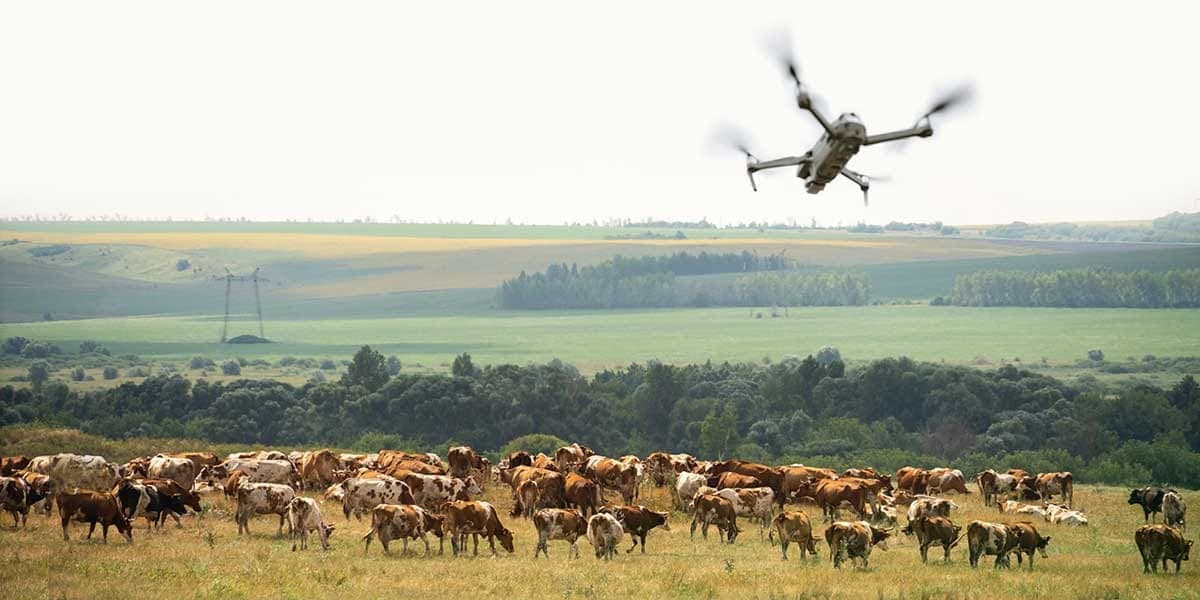
A dock on the ranch flies the pastures on your schedule and sends one notification: how many head, which ones are off on their own, whether the water is there and whether the fence is still up. Nothing else.
What lands
- Every flight: head count, count exception, down or isolated animal, water check, fence and gates, feed and mineral
- Weekly or per rotation: forage mass by paddock, rotation record, weed and brush map, manure and mud map
- Seasonal: spring pasture, hay pre-cut and post-cut, calving watch, bull check, heat stress, winter feeding
- On call: stray and escape search, predator and carcass check, pre-sale or lender inventory, insurance documentation
Plans
A credit is one flight.
Cattle
Buy the dock
from $1,275/mo
2, 4 or 8 flights a month on a dock you own
Additional flights $100 each. Every bundle includes the count, the exceptions, the water and the fence on each flight.
Lease the trailer
from $3,099/mo
4, 8 or 20 flights a month on a trailer dock we own
Same deliverables, no hardware to buy. Neighbors fly off your trailer at a per-acre rate, and a share of what they pay is credited against your lease.
Purchase packages from $40,335, plus a three-year service plan. The survey sets the final figure, because the pad, the power and the connectivity are different on every site.
What it saves
A monthly figure is only half the sum. Here is the other half, in numbers somebody other than us published.
Cattle
One animal covers most of a year
Calves have run at records through 2024 and 2025, and at $300-plus a hundredweight a 500-pound calf is well north of $1,500. Monthly service on a dock you own starts at $1,275. Find one down animal, one calving problem or one gate left open a season and the arithmetic has already moved.
Source: USDA AMS Livestock Market News
Labor
The drive is the expensive part
USDA put the average gross wage across all hired farm workers at $19.52 an hour in April 2025, and $18.15 for livestock workers. Two hours a day driving out to look at fields or pastures is roughly $1,100 a month of somebody's time before the truck, and it is time spent on the search rather than on the problem. Monthly service on a dock you own starts at $1,275, and the flight happens whether or not anybody has the morning free.
Source: USDA NASS, Farm Labor
Published figures from the sources named, not our estimates of your operation. Your acres, your inputs and your labor decide what this is actually worth, which is what the site survey is for.
And on our own prices
Arithmetic on the plans above, so it stays true when they change.
The bundle beats buying flights
Additional flights are $100 each. Eight cattle flights a month on the 2-flight plan, plus six extras, costs more than the 8-flight plan outright, so pick the bundle that matches the cadence and keep the extras for the storm week.
On cattle, a lease is about two years of the difference
A trailer lease starts at $3,099 a month against $1,275 on a dock you own, a difference of about $1,825. A purchase package from $40,335 is about twenty-two months of that difference, before the service plan.
Neighbors buy down the cattle lease too
What a neighboring operation pays to fly off your trailer is credited against your lease, the same as on crop.
What lands, and how often
The first six are the product: one notification per flight with the count, the exceptions, the water and the fence. The rest are there when the season or the bank asks for them.
Every flight
Included on every plan, on every flight the dock makes.
Head count
Thermal count per pasture vs. expected number
Count exception alert
Short, over, or animal outside the fence line; pin + zoom photo
Down or isolated animal
Heat signature that has not moved between flights; pin + photo. Calving and heat-stress product.
Water check
Trough level and flow, tank level, creek access; pinned photo per water point
Fence and gate check
Open gates, down wire, trees on fence; pinned photo
Feed and mineral check
Bale ring status, mineral feeder level, bunk condition (feedlot)
Weekly or per rotation
A map and an action line, on the Standard and Heavy plans.
Forage mass by paddock
Biomass index per paddock, ranked: graze next, resting, ready. Tied to the grazing plan.
Rotation record
Dated image of each paddock at entry and exit. Proof of grazing days for EQIP/CSP and grass-fed claims.
Weed and brush map
Thistle, multiflora rose, cedar, poison hemlock flagged with a spot-treatment Rx load file for the client's sprayer
Manure and mud map
Feedlot pen conditions, lot drainage, bedding and scraping zones
Seasonal
Tied to the season rather than to the flight schedule.
Spring pasture assessment
Winterkill, bare ground, erosion, reseeding and frost-seeding zones
Hay pre-cut / post-cut
Stand, weevil, maturity before; regrowth after. Alfalfa follows its own pass schedule.
Calving season watch
Daily or twice-daily flights through the calving window; calving log with new-calf locations, cows off alone, animals in draws or creeks
Breeding season bull check
Bull location relative to the cows each flight
Heat stress report
Summer afternoon thermal pass: bunching, shade and water use, with a shade/water recommendation
Winter feeding record
Bale placement, waste, pugging around feeding sites, for next year's
On demand
Called in when you need it, quoted per call.
Stray and escape search
Thermal search of the property and neighbors; pin. Same product as deer recovery.
Predator and carcass check
Coyote or vulture activity, dead-animal location for rendering pickup
Pre-sale or lender inventory
Dated head count with imagery for a cattle note, lease, or sale
Insurance documentation
Storm, flood, lightning, barn damage; dated georeferenced imagery
Infrastructure survey
Fence line map, water points, acreage by paddock, boundary file. Base map for everything above; delivered at install; doubles as the site survey package.
Get a Site Survey.
Tell us where you are and what we are watching. We map the property, pick the dock location, and prepare the site package for your site.