Service
AcreWatch Apply
Precision application, acre after acre.
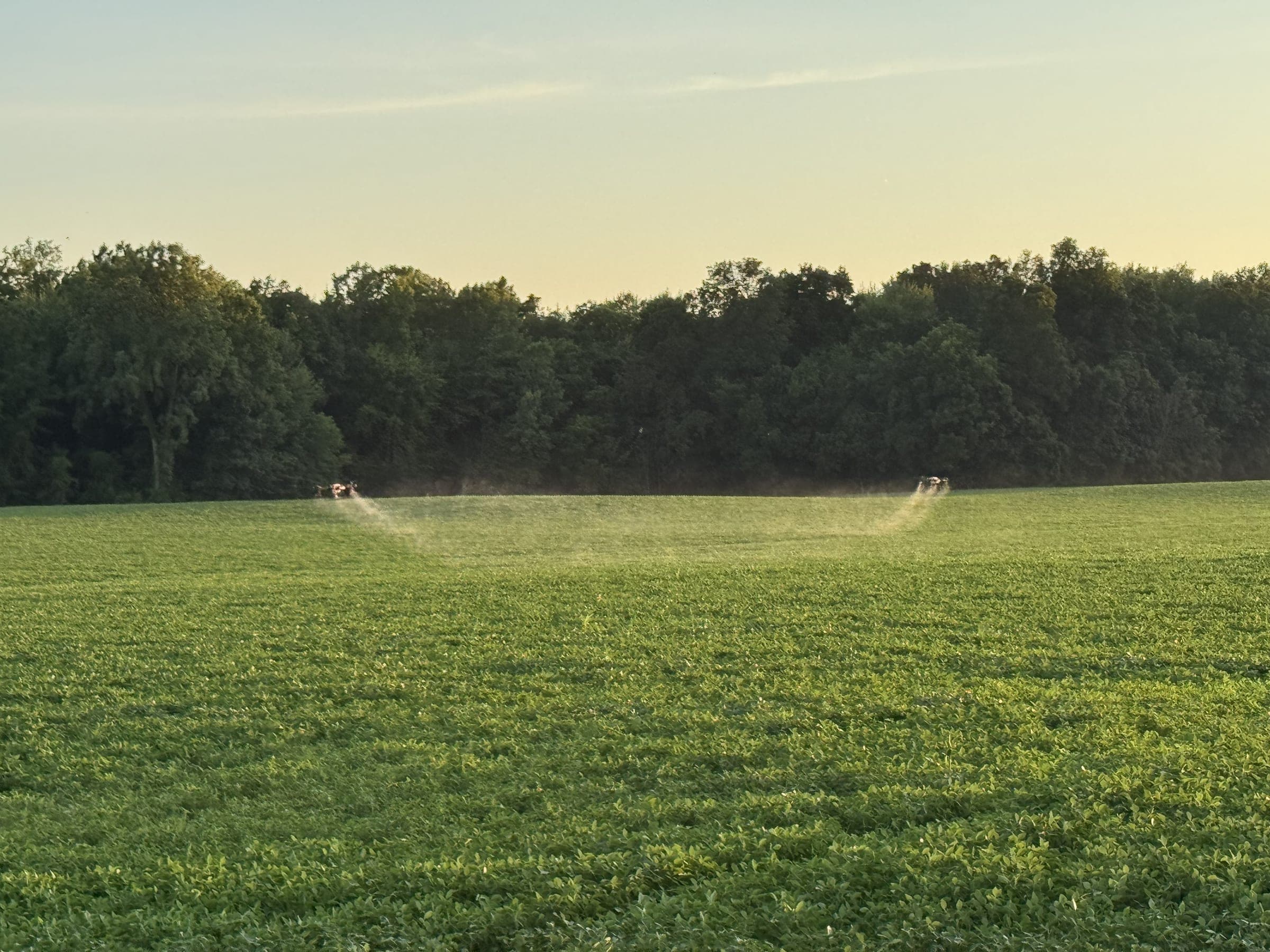
AcreWatch Apply flies agricultural drones to apply herbicide, fungicide, insecticide, and fertilizer, and to seed cover crops, with precision. Every job is flown by a licensed remote pilot under Part 137 and the required FAA authorizations. Applying from the air lets us treat wet fields, steep or terraced ground, tall standing crops, and odd-shaped or hard-to-reach areas without rutting soil or waiting for the ground to dry.
Every job is flown to a calibrated plan and logged, so you get a clear record of what was applied, where, and at what rate. Variable-rate and spot treatments put product only where the dock or the pass called for it, trimming chemical use and protecting buffers and sensitive areas.
Aerial seeding gets cover crops established into standing corn or beans, well before harvest opens the window, so you protect soil and hold nutrients without waiting on a ground rig or a second trip across the field.
What we do
- Flown by a licensed remote pilot under Part 137
- Aerial application of herbicide, fungicide, insecticide, and fertilizer
- Cover-crop and small-seed aerial seeding into standing crops
- Variable-rate and spot treatments driven by the dock's maps
- Coverage of wet, steep, terraced, and hard-to-reach ground
- Calibrated flight plans with full application logging
What it saves
Published figures from outside this site, for the acres this service covers.
Crop
Put the input where it pays
Product and application put a fungicide pass somewhere near $18 to $20 an acre by the time it is on the ground. A pass is $2.00 an acre. If the map says skip a quarter of the field, that one pass has paid for itself more than twice over, and you still have the record of why you skipped it.
Labor
The drive is the expensive part
USDA put the average gross wage across all hired farm workers at $19.52 an hour in April 2025, and $18.15 for livestock workers. Two hours a day driving out to look at fields or pastures is roughly $1,100 a month of somebody's time before the truck, and it is time spent on the search rather than on the problem.
Source: USDA NASS, Farm Labor
Published figures from the sources named, not our estimates of your operation. Your acres, your inputs and your labor decide what this is actually worth, which is what the site survey is for.
Industries served
Explore more services
Eyes in the sky. Decisions on the ground.
Put eyes in the sky over your operation.
Tell us about your acres, sites, or assets and we'll survey the site and map out a monitoring plan.